Saturday, April 14, 2012

GOOGLEart ... a new place to muse

CLICK HERE TO GO TO SOURCE
Google Art Project premieres upgrades in Chicago CARYN ROUSSEAU April 4, 2012 

High tech merged with high culture Tuesday at The Art Institute of Chicago when Google Inc. announced an upgrade to its Google Art Project initiative, adding thousands of works in dozens more countries. The project provides access to more than 30,000 ultra-high resolution images of paintings, sculptures and photographs from 151 museums and other institutions in 40 countries ... Google Art Project launched in February 2011 with about 1,000 artworks from such institutions as the Tate Gallery in London, the Metropolitan Museum of Art in New York City, the Uffizi in Florence and the Van Gogh Museum in Amsterdam. "From now on anyone can visit these great institutions with just the click of a mouse," Google President Margo Georgiadis said. "This project breaks down all of the barriers and allows people to study art in a seamless way." ... It's all part of Google's ambitious effort to enable anyone with an Internet-connected device to check out the vast reservoir of human knowledge and creativity stored in libraries and museums around the world. Google already has made digital copies of more than 15 million books during the past seven years, although it can only show snippets from many of them because of copyright restrictions. The company also has been scanning manuscripts and other documents in public and academic libraries. Now, the Internet search leader is expanding its art collection ... Click here to read more 

Click here to go to GOOGLEart 

SHOULD KIDS BE BANNED FROM ART GALLERIES?

Jacqueline Maley Jacqueline Maley is the Canberra-based Parliamentary Sketch Writer for The Sydney Morning Herald.  

"There are about ten thousand things children would rather do than traipse around a place where they have to be quiet and look at static objects they don’t understand." I was half way through the gallery, somewhere between the flat, post-Gothic Madonna/Jesus stuff and the later, more interesting portraits - the ones where the people actually start to look like people - when I really wished all the children would go away. Like the rest of the people at the National Gallery that day, I had come to look at the Italian Renassaince paintings. Unlike the rest of the people of the National Gallery that day, I hadn’t taken my children along. In part this is because I don’t have any. But I like to think that even if I had half a dozen of them, each of whom was perfect and special in their own way, and at least one of whom was sure to grow up to be a great artist, I still wouldn’t have brought them ... Click here to read the full story
Monday, April 9, 2012

10 DESIGN JOURNEYS

CLICK HERE TO GO TO SOURCE
"10 Design Journeys takes 10 works that came into the Tasmanian Wood Design Collection prior to 2002 and matches them with 10 works made in the years since. Peter Adams, Axiom Design, Mark Bishop, Linda Fredheim, Stuart Houghton & Craig Rosevear, Brad Latham, Patrick Senior, Paccy Stronach, Witt Design and Marty Wolfhagen, each come from very different points of design departure... Over the last ten years some have returned to their beginnings, others have taken radically different paths, all are driven by the transformation of their ideas into physical form. Changing technology, traditional values, sustainability of resources, social conscience and the quality of aesthetics, all permeate their work to differing degrees.

The exhibition included a series of short concentrated video interviews, produced by the Design Centre's Lauren Dean, visitors whether on-site or online, will hear designers talk about their work, their ideas and what drives them. 

The Design Centre is leading the way with 21st Century exhibition design here and setting new benchmarks against which exhibition design can be measured.

MUSING, MUSEUMS & LIES

CLICK HERE TO SEE SOURCE

FROM “Hunting the Collectors: Pacific Collections in Australian Museums, Art Galleries and Archives

  • Editor: Susan Cochrane and Max Quanchi 
  • Date Of Publication: Feb 2007 
  • Isbn13: 9781847180841 
  • Isbn: 1-84718-084-1 
 CHAPTER 3: The perils of ethnographic provenance: the documentation of the Johnson Fiji Collection in the South Australian Museum RODERICK EWINS 

This essay addresses the vexed questions of provenance and authenticity of objects that have been collected and made accessible for study. It calls for an exploration of the way in which these have often been uncritically accepted solely on the basis of notes and comments made by the original collectors. The difficulty is that the authority with which collectors were able to speak varied enormously, and even when the collectors obtained objects personally from the original owners, it cannot be assumed that they understood clearly the names, purposes or provenance of the objects they obtained” [RE] ..... The problem with things is that they are dumb .... And if by some ventriloquism they seem to speak, they lie once removed from the continuity of everyday uses in time and space and made exquisite on display, stabilised and conserved, objects are transformed in the meanings that they may be said to carry [1 Crew & Sims 1991: 159.]” – “ ..... Most collectors had made little or no effort to establish exactly where, or by whom, they had been made or used. And second, a few of these collectors had passed on notes with the objects, ranging from terse to quite expansive, about the names, nature and uses of the objects in their originating society. Such notes were, as usual, carefully transcribed into the catalogues of the Museum, and thence onto labels identifying the objects in display cases, to give them some voice and overcome their dumbness ..... The trouble with all of this transcribing and labelling was that in many cases the ventriloquist’s voice did indeed lie. Most dangerous was the case where the lie was mixed with smatterings of truth. Non‑specialist visitors and observers in the Museum, if they read these labels carefully (as I have observed many doing), were given a range of false impressions and thus attitudes, even convictions. They were no longer, as they were when entering the museum, merely uninformed. They were now misinformed, and took away with them erroneous and misleading information on which to base future judgements, and to pass on to others.” [RE] Pages 32 & 33

 Roderick Ewins Link: Click Here 
BOOKlink: Click Here  

Thursday, April 5, 2012

FRED WILLIAMS:Infinite Horizons

CLICK HERE TO GO TO SOURCE

Rediscover Australia through the eyes of one of the nation's greatest artists. This comprehensive retrospective highlights Fred Williams' strength as a painter, revealing his distinctive approach to oil painting inspired by Australian landscapes. 

This is the first major exhibition to focus on Williams in more than twenty five years. 

PROGRAM HIGHLIGHT
Short Course: Enhance your understanding of Fred Williams and this exhibition by joining the gallery for a more detailed look at Fred Williams’ art and role in Australian art. 
Fist talk: Sat 5 May, 2–4.30pm 
The man behind the work,  Dr Deborah Hart, curator of Fred Williams: Infinite Horizons delves into Williams’ perspectives on art and museums, as well as his insights into locality and the painting process, as revealed through her research into his diaries and a range of interviews with the artist. 

 Speaker Dr Deborah Hart, Senior Curator, Australian Paintings and Sculpture post-1920, NGA

A National Gallery of Australia Exhibition.

Wednesday, March 28, 2012

SOUND MUSEUM

CLICK HERE TO GO TO SOURCE
 UbuWeb Sound originally focused on Sound Poetry proper, UbuWeb's Sound section has grown to encompass all types of sound art, historical and contemporary. Beginning with pioneers such as Guillaume Apollinaire reading his "Calligrammes" in 1913, and proceeding to current practitioners such as Vito Acconci or Kristin Oppenheim, UbuWeb Sound surveys the entire 20th century and beyond. Categories include Dadaism, Futurism, early 20th century literary experiments, musique concrete, electronic music, Fluxus, Beat sound works, minimalist and process works, performance art, plunderphonics and sampling, and digital glitch works, to name just a few. As the practices of sound art continue to evolve, categories become increasingly irrelevant, a fact UbuWeb embraces. Hence, Ubu artists are listed alphabetically instead of categorically. UbuWeb embraces non-proprietary, open source media. As such, most of the newer files are encoded in the more universally readable MP3 format. However, when a recording is still in print and available, Ubu only serves it in streaming RealMedia; Ubu doesn't wish to take whatever small profits might be made from those taking the efforts to gather, manufacture and properly distribute such recordings. Instead, Ubu hopes that by streaming these works, it will serve as an enticement for UbuWeb visitors to support the small labels making this work available. All MP3s served on UbuWeb are either out-of-print, incredibly difficult to find, or, in Ubu's opinion, absurdly overpriced.

Monday, March 26, 2012

Paleontology & Adults Only Events Marketing

CLICK HERE TO LISTEN AND/OR READ THE TRANSCRIPT
This story on Robyn Williams' The Science Show on Radio National has an element that should be of interest to the serious marketers of museum programs. It alerts us to what can be done – rather what is being done – to attract audiences to museums and engage with them.  

Yes it is rather audacious to be letting rock bands into paleontology exhibitions or serving 'adults only' slap up dinners with an after dinner speaker talking about the sex lives of bonobo chimps but apparently it works a treat for income generation.  

It appears that this is beginning to happen in Australia with the Melbourne Museum and Questacon  in Canberra too with them occasionally organising Adults Only nights. Its likely to be happening in a museum near you soon or maybe the museum will close down due to the lack of funds.

Museums are beginning to learn about marketing and advertising. ,The first rule of marketing is "HAVE A PRODUCT." Also, apparently the best way to kill a bad/ordinary product has proven to be "ADVERTISE IT." Watch this space! 

Saturday, March 24, 2012

VENDING CULTURE

CLICK HERE TO GO TO SOURCE
Vending machines are almost omnipresent in the so-called 'Developed World' with all levels of technology manifesting themselves in these machines.  When it comes to 'low-tech, high-concept Art-o-mats'refurbished old, mechanical cigarette machines selling small pieces of artwork for $5 its almost unnerving. Art-o-mat is the brainchild of Clark Whittington of Winston-Salem, N.C., who has sold about 100 of the retro machines, now scattered around the country in museums, galleries, hotels, restaurants and shops. Colorfully customized by Mr. Whittington, the machines sell about 30,000 pieces a year and the 300 artists who supply the inventory receive $2.50 for each piece sold. Scott Blake, an Omaha-based artist known for giant portraits constructed from bar codes, says the vending machine gives artists wider exposure as well as additional revenue. "It's easier to sell a million one-dollar things than one, $1 million thing," says Mr. Blake. "I'm working my way up to $1 million, one dollar at a time." Its about time Art Museums got on board this one. This looks like a real 'cultural experience' ... Click here to read more

10 Most Bizarre Vending Machines in Japan ... With one vending machine for every 23 people, Japan has one of the highest vending machine densities in the world. You can hardly walk 100 meters without finding a vending machine in Japan. Japan has a dense population, limited space, and a decreasing number of working age people. Vending machines have proven to be a convenient solution to the problem. Almost any good you can purchase in a store, you can find in one of Japan’s 6 million vending machines ... We might imagine these machines collectively as street museums purveying the culture  of now. 

Exposition Sol LeWitt - Wall Drawings from 1968 to 2007

CLICK HERE TO GO TO SOURCE
 Sol LeWitt The Centre Pompidou-Metz is organizing a major project around the American conceptual artist Sol LeWitt (1928-2007). In the 13,000 square feet of Galerie 2, the Centre Pompidou-Metz is hosting a retrospective of Sol LeWitt's wall drawings on a scale never seen before in Europe. The selected thirty-three wall drawings, the largest group ever exhibited in Europe, span the artist's career from its beginnings to his final works. Chosen from the 1,200 wall drawings which LeWitt created between 1968 and 2007, they reflect both the extraordinary consistency of his systematic explorations - with rigorous sets and combinations of geometric elements - and the remarkable diversity of his practice, both in the evolution of forms from simple geometric figures to what the artist called "complex" or "continuous" forms, and of the materials used (from pencil and crayon to ink washes, acrylic paint and graphite). Through a remarkable partnership with local schools of art and architecture, the execution of these wall drawings at the Centre Pompidou-Metz fully conveys the spirit of collaboration and generosity advocated by the artist. In partnership with the Centre Pompidou-Metz, and as a chromatic counterpart to this retrospective of wall drawings in black and white, M-Museum in Leuven (Belgium) will show, from June 21, twenty wall drawings in color. In 2013, the Centre Pompidou-Metz will show Sol LeWitt's personal collection. This second exhibition will reflect LeWitt's extraordinary career not only as a prolific artist but also as an insatiable collector. The LeWitt Collection, built up largely through trades and gifts rather than purchases, contains, alongside a selection of LeWitt's own works, over 4,000 works by other artists. With over 250 works and documents, the presentation at the Centre Pompidou-Metz will be the first major showing of the LeWitt Collection in Europe. Curator: Béatrice Gross, independent curator and art critic, New York ... Sol Le Witt Obituary New York Times

THE MUSEUM OF THE FUTURE: A Curatorial Intensive in China

CLICK HERE TO GO TO SOURCE
Independent Curators International and the Ullens Center for Contemporary Art announce Curatorial Intensive in Beijing Program Dates: August 5–11 Application ... Deadline: May 9 www.curatorsintl.org ... Independent Curators International (ICI), New York, and the Ullens Center for Contemporary Art (UCCA), Beijing are now accepting applications from curators working around the world to participate in The Museum of the Future?: Curating Institutions, the first Curatorial Intensive to be held in China ... Organized from August 5–11, 2012, the short-course training program will use curatorial thinking to examine strategies for creatively building infrastructures for contemporary art that respond to the changing needs of artists and new art publics. Since the "Experimental Institutionalism" that arose in Europe at the beginning of the new millennium curators have increasingly taken on directorial roles to establish new precedents for programming institutions and challenging traditional exhibition formats. Now, worldwide we are witnessing the development of an incredible range of institutions—from the smallest and most itinerant to vast exhibition halls amidst the mega-complex—that are responding to the social and political contexts through which they arise ... This 7-day program will explore the historical precedents, new models, and emergent curatorial practices that are influencing the infrastructures for art through an intensive schedule of seminars, site visits, individual meetings, and round table discussions. Faculty include Zdenka Badovinac (Director, Moderna Galerija, Ljubljana), Tobias Berger (Curator, M+ Museum for Visual Culture), Zoe Butt (Curator and Director of Programs and Development, San Art), Yu Ding (Vice President, School of Humanities and Director of Arts Management Department, CAFA), Kate Fowle (Executive Director, Independent Curators International), Wang Huangsheng (Director, CAFA Art Museum), Rodrigo Moura (Curator, Instituto Inhotim), Zhou Tiehai (Director, Minsheng Art Museum), and Philip Tinari (Director, Ullens Center for Contemporary Art). The Curatorial Intensive at UCCA is organized in affiliation with the College of Humanities at the Central Academy of Fine Arts in Beijing ... CLICK HERE FOR MORE ABOUT ICI

Wednesday, March 21, 2012

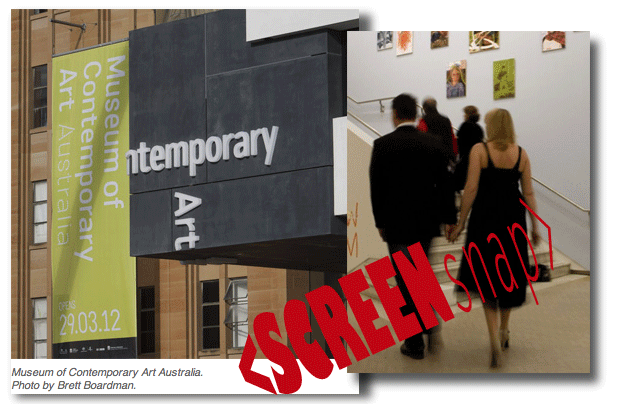
Sydney's MCA Reopens – March 29

CLICK HERE TO GO TO SOURCE
The MCA's 2012 Reopening Program Launches with Marking Time, Christian Marclay's The Clock, a new presentation of the MCA Collection, new commissions, performances and more. March 29, 2012 10am–5pm Daily, 10am–9pm Thursday Museum of Contemporary Art Australia 140 George Street The Rocks, Sydney, NSW 2000 mca.com.au ... On Thursday 29 March 2012 a new and significantly expanded Museum of Contemporary Art Australia will be unveiled to the public. The redevelopment transforms the MCA, with spacious new galleries including an entire floor dedicated to the MCA Collection; the National Centre for Creative Learning with state-of-the-art technology; public spaces that embrace one of the world's most famous locations, and a series of site-specific artists' commissions. Architect Sam Marshall in association with the Government Architect's Office has created a contemporary building that responds to its unique location and meets the needs of the Museum, bringing together old and new to create a context for engaging artists with audiences for the 21st century. The new MCA opens with Marking Time, which explores the ways in which artists visualise time, from family history and the failures of memory, to the ancient time of the planet or cosmos, to calendar cycles mapping the duration of the exhibition itself and its passing, across diverse media. Marking Time features works by: Edgar Arceneaux (US), Jim Campbell (US), Daniel Crooks (AU), John Gerrard (UK), Lindy Lee (AU), Tatsuo Miyajima (JP), Rivane Neuenschwander (BR), Tom Nicholson (AU), Katie Paterson (UK), Elisa Sighicelli (IT), and Gulumbu Yunupingu (AU). The highly acclaimed 24-hour video installation The Clock by Christian Marclay will occupy the largest gallery, Level 1, in the new wing. The Clock will be shown in its entirety on the MCA's opening day, then played continuously during regular museum opening hours. Every Thursday there will be a special 24-hour presentation of this work. The new MCA opens with a focus on its Collection, works acquired since the MCA was established in 1989. Volume One: MCA Collection, includes more than 150 Australian artists. Selected by MCA Curator Glenn Barkley, Volume One: MCA Collection reflects the diversity of Australian contemporary art over the past 20 years, including work by Aboriginal and Torres Strait Islander artists, the consolidation of film and video practice from a marginal to central position; the emergence of diverse cultural voices; as well as ephemeral and performative practices. Artists include... click here to find out more and read more


Click here to read more


MUSEUM MEMBERSHIP: The Tate's model for success

CLICK HERE TO GO TO SOURCE

There’s a great deal museums everywhere can learn from a program like Tate Members when we’re talking about 'online community building' and other activities where we want people to get together in an organised way around a cause. Here’s a couple of things to take away from repeating the Tate Members story at least 50 times:
  1. Have clear benefits ... invent things people can get FREE
  2. Keep repeating why people should join ... Because there are always new people being born that need to know 
  3. Outreach versus engagement ... Its as much about finding new members as keeping the old ones happy
  4. Treat different people differently ... Not everybody wants the same benefits ... Simply repeating your marketing message all the time might scare members away that have grown past being a member for the benefits
  5. Build a tribe ... The best thing about Tate Members is the welcome package– it makes you feel that you are part of Tate. These things are gold. 
  6. Be very, very serious about it  ... The moment people get together magic happens, and the moment they are invited to get together and the host isn’t in it for 120%, the party is ruined... We can bet on it that you remember such parties
  7. Click here to read more and get more

MUSEUMS: Who bloody well needs them?

CLICK HERE TO GO TO SOURCE
Museums today fill a different space in the imagination of people – especially people in the so-called developed world. With sites such as this one, and the myriad of others that fill the same kind of gap, who needs to visit a collection of dusty exhibits to satisfy their curiosity or even to spark it? Just who is going to a museum to stimulate themselves? Who is doing it more than every now and then?

Museums and art galleries operating on a 19th cum 20th Century model (mindset?) when colonialism was relatively fresh in our collective consciousness, and that celebrate the status quo, are arguably redundant. Children, by-and-large, are streets ahead of museum functionaries' thinking and very often are pretty much unimpressed by what they see in front of them. 

SOME people find new and unexpected ways to engage with these dusty places called museums – and sometimes takeaway interesting things. Likewise SOME museums and art galleries actively look  for ways blow away the dust and for new ways to engage with their audiences – children, students, researchers, citizens of all ages and cultural backgrounds, etc –and deliver culturally engaging  programs. 

Sadly too many museums and art galleries funded by 'the taxpayer' are loosing their credibility, their social license to operate, their sense of purpose, their vitality and whatever it was they once could rely upon to win the accolades of the communities they belonged to.

Albeit two quite different kinds of visitation, if your brain is hungry there is a choice of collections one might visit. For many they are just a 'mouse click' away and for others you may need to drive to town.

Jack Bauer

Friday, March 16, 2012

CHAMBERLAIN AT THE GUGGENHEIM NEW YORK

CLICK HERE TO GO TO SOURCE
February 24–May 13, 2012 

 Often identified as the artist who successfully translated Abstract Expressionism into three dimensions, John Chamberlain wound through Franz Schubert, the U.S. Navy, hairdressing, the Art Institute of Chicago, and the Black Mountain College poets on his path to art. In Chicago, Chamberlain admired the work of Willem de Kooning and David Smith and learned to weld. Black Mountain instilled in him an intuitive collage sensibility and an approach to language that favored the visual appearance and sounds of words, dissociating them from their definitions.

Friday, March 9, 2012

A PARADIGM SHIFT IN FURNITURE DESIGN

CLICK HERE TO FIND OUT ABOUT GODSPEED
CLICK HERE FOR GODSPEED ON flickr


The New Computing Paradigm on the Horizon and Museums

CLICK HERE TO GO TO SOURCE
CLICK HERE FOR ANOTHER STORY
Well we can probably look forward to the day when every exhibit can have its own computer and able to afford it. Also there is the promise of little robots cruising about in museums enriching the musing  and goodness knows what else. The sceptics say "its a way off yet" but there you go these same people said the same thing about iPODs and all kinds of things. 

One museum, the Santa Cruz MAH has worked out how to get iPODs in the museum – and very very cheaply. They are asking their community to donate their old iPODs to them. If you upgrade to an iTOUCH or an iPHONE you'll, as likely as not, you'll have a redundant iPOD. If you're not sure what to do with that iPOD that was such a big purchase back then, well you could give it a museum who wants to engage with its audience. 

That museum would offer you a way to redistribute your resources instead of throwing away something that has more technology in it than most things in your home and has an enormous amount of musing life left in it. ALL THIS CAN HAPPEN RIGHT NOW

Museums need iPODs, old and new, to play music, deliver sound bytes and more still in the galleries. MoNA in Hobart has started to work out what can be done with this kind of technology.  So take your forlorn and lonely iPOD to the front desk of a museum near you and test its relevance to the 21st C.  Your museum may well give it a new life, or  have a solution for you that supports local art and history in your community. 

A 21st C museum should be able to offer you a way to redistribute your resources instead of throwing away something that has more technology in it than your microwave. A 20th C museum would look to their collection policy and wonder if you iPOD would fit their collection policy.

Indeed yo may well have other superseded technology that could still do a job in a museum beyond being an exhibit!

Thursday, March 8, 2012

28 Things To Do With New Media In A Museum

CLICK HERE TO GO TO SOURCE

The Museum of Islamic Arts ...  Last week Jim Richardson (Sumo/MuseumNext) and I hosted a 2-day workshop to help the Qatar Museum Authority (QMA) develop their digital engagement strategy. After two intense days of gamestorming, project design and requirement discussions I left Doha with the strong feeling we might have to look east if we want to discover what the museum of the future looks like ...  Click here to read more ... Click here to watch the video 5stars

Recent Posts On This Site:

  •  5 things you could do with P interest, your institution’s new best friend 
  • Cultural innovation 101, or the basics of turning our world upside down 
  • Now that Wikipedia is perfect, 3 opportunities for your institution to shine 
  •  7 ways to make yourself and your museum more creative (and successful
 Popular Posts :
  •  6 useful Google Analytics Custom Reports and Advanced Segments for museum websites 
  •  30 do’s for designing successful participatory and crowdsourcing projects 
  •  28 low-budget, easy-to-do things to do with new media for cultural institutions  
  • How the Google Art Project might revolutionize the physical museum experience 
  • Integrated media strategies for museums

Monday, March 5, 2012

What art museums should learn from Christianity

CLICK HERE TO GO TO SOURCE

What art museums should learn from Christianity 
Alain de Botton ABC Religion and Ethics 22 Feb 2012
 
 "Christianity never leaves us in any doubt about what art is for: it is a medium to teach us how to live, what to love and what to be afraid of ... You often hear it said that "museums of art are our new churches." In other words, in a secularising world, art has replaced religion as a touchstone of our reverence and devotion ... It's an intriguing idea - part of the broader ambition that culture should replace scripture - but in practice art museums often abdicate much of their potential to function as new churches (places of consolation, meaning, sanctuary, redemption) through the way they handle the collections entrusted to them ... While exposing us to objects of genuine importance, they nevertheless seem unable to frame them in a way that links them powerfully to our inner needs. The problem is that modern museums of art fail to tell people directly why art matters, because Modernist aesthetics (in which curators are trained) is so deeply suspicious of any hint of an instrumental approach to culture ... To have an answer anyone could grasp as to the question of why art matters is too quickly viewed as "reductive" ... We have too easily swallowed the Modernist idea that art which aims to change or help or console its audience must by definition be "bad art" (Soviet art is routinely trotted out here as an example) and that only art which wants nothing too clearly of us can be good ... Hence the all-too-frequent question with which we leave the modern museum of art: what did that mean?" ... Click here to read & watch more

Monday, February 20, 2012

MUSING IN AUSTRALIA

click here to connect

Giant Step Towards Institutional Change

click here to go to source
Giant Step is a project organized for the purpose of discovering the place of the institution within contemporary culture, with institutional change being the ultimate goal. To provide a range of perspectives, Giant Step involves two internationally established institutions, Van Abbemuseum (represented by Charles Esche) and MOSTYN | Wales (represented by Alfredo Cramerotti), and two that are less connected to a rigid institutional structure, vessel (represented by Viviana Checchia and Anna Santomauro in cooperation with Vlad Morariu) and Galeria Labirynt (represented by Magdalena Linkowska in cooperation with Anna Smolak and Magdalena Ujma)Giant Step begins by researching the specific issues and urgencies that occur in each of the local and national contexts where these institutions function (Italy, Netherlands, Poland, UK). In the second phase of the project, there will be an analysis of the various applications of cultural production in Europe in order to foster dynamic dialogue and discussion. The main goal of this project is to establish possible roles that institutions could play in the cultural production of a specific area, in order to respond to the needs of the area itself. In this process, Giant Step aims to develop the concept of an "ideal" institution, which entails the necessities of supporting and developing culture and creating critical dialogue ... This will be a multidisciplinary process carried out through the format of a "nomad symposium," which allows the application of efforts to a variety of local artistic communities and audiences. Due to high influence from the heritage of historical institutional critique, Giant Step will focus on relaying this material; local cultural operators will be provided with books, interviews, workshops, and talks, which will be the basis for the discussions. Multiple issues will be addressed, such as the adaptation of "traditional" cultural institutions to complicated economic, social, and cultural contexts, the ideal form of the institution and its production, and the adaptation of current formats to keep up with cultural and societal change. The Giant Step project has begun on January 9, 2012, with all partners starting their research activity with their local artistic and cultural communities in order to focus on aspects that will be discussed during the symposia. Each respective partner will have a separate timeframe for the Giant Step symposia. June 12th signals the start of activity production, with the first of the four symposia. Promoted by vessel, it will also found the basis for another important appointment of the Italian institution: vessel's International Curatorial Workshop, an intensive three days workshop for young curators from all over the world, which in this second edition, June 15–17, will deal with the theme of institutional critique. To participate in vessel's International Curatorial Course, submit to the open call by 24th of March 2012. At www.giant-step.org, it is possible to get further information about the project, the institutions involved and all the other activities connected to Giant Step.
GO2 ... http://www.eurocult.org/

Sunday, February 19, 2012

AUDATIOUS MARKETING

CLICK HERE TO GO TO MoNA ONLINE
"Things just got weirder, thanks to our ass-kicking resident Yanks Kirsha Kaechele and Daphane Park. You already know that Kirsha is running the Mona Market on the roof of the museum – every Saturday until April 14 ••• There's fresh, local produce to take home with you and yummy food to eat on site, as well as live music and weekly workshops. Store your produce in our fridge for free, while you shop and laze. And store your kids with us as well, at the MoMa Minors workshops  ••• What you don't know is that Kirsha and Daphane, an artist from New York, were tragic victims of ‘tent fraud'. This basically involved handing over a significant amount of money to a non-existent tent-fabricating company. So the tent was delayed. Gaddamit! Anyhow, it's here now: a ‘Minnie Mouse Gangster Feathered Serpent' inspired, says Daphane, by ‘the imminent return of Quetzalcoatl and the resultant end of the world'. Remember: they're Yanks."

Saturday, February 18, 2012

DEADpiano Muses

Click here to watch & listen
dead piano abandoned piano buggered piano wreaked piano stuffed piano
Click here for more & to go to source
Click here to listen
Click here to identify the owner

ecoCULTURE and 'The Forest'

Eileen MacDonagh with her Ogham Stones 2012,
VISUAL Carlow: photo Cathy Fitzgerald
ecoartnotebook is where Cathy Fitzgerald writes about eco-art works that inspire her and that hopefully will inspire others. 

This site also documents a SLOW ART project. It's an ongoing diary in images, short films; detailing the transformation of a small monoculture conifer plantation in IRELAND into an ecologically & economically, permanent real FOREST. 

In Cathy Fitzgerald's art practice she's interested in how we represent NATURE on FILM - is it possible to create films that convey a more ECOCENTRIC, empathic world view, re-examining how we connect and experience what's around us near at hand and further away

Let's imagine this as DIGITALmusing! Let Museums and art galleries engage more in DIGITALmusing.

Click here to go Cathy's  ECOCINEMA 

Wednesday, February 15, 2012

LACE?

CLICK HERE TO VISIT ONLINE!

MONA's food for thought

CLICK HERE TO MAKE THE LINK

MORE than the "first lady of MONA", David Walsh's partner Kirsha Kaechele aims to bridge cultural divides. This weekend, Kaechele's MoMa market project, which features local food curators Jo Cook and Michelle Crawford, market co-ordinator Shae Thomas and design stalls curator Natalie Holtsbaum, adds a new element, with visiting New York artist Daphane Park's "Minnie Mouse Quezacotl rainbow serpent"

Valentine’s Day 2012 – A special event for donors to the University of Queensland Art Collection & Art Museum

CLICK HERE TO MAKE THE LINK
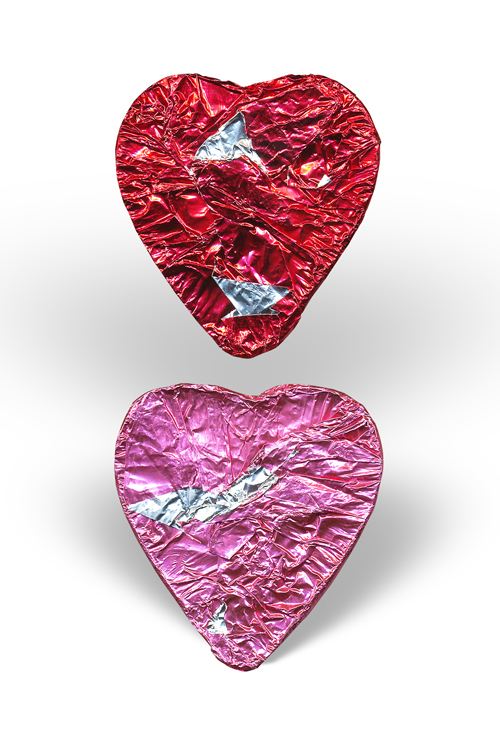
The occasion also marked the launch of the University of Queensland Art Collection Online - go here or jump to my 'collection residual gift' page, Dr Campbell Grey's team with the online main man, Christian Moody are in the process of making this happen across the 3000+art works in the collection. The individual seating at last night's dinner had these foiled chocolates, I always like the other side, a reverse twist, the hidden or shadow part of the equation. A boxed set of cards and envelopes with an •image by Dr William Yang (Willy Young to those of us locals with a memory) was also given to guests. - *somebody loves me 2009.

100 Silences X 100 Listenings

CLICK HERE TO ACCESS A LIST OF CELEBRATORY EVENTS
2012 is John Cage's (September 5, 1912 – August 12, 1992) centenary year. Recognised as one of the most important composers of the 20th Century, John Cage’s true legacy extends far beyond the world of contemporary classical music. Cage alerted us to a world where we might no longer look at a painting, a book, or a person without wondering how they might sound if you listened closely.

the auxiliaryMUSEUM Celebratory Score:

  • Perform a silence for 4' 33" 100 times
  • Listen in silence for 4' 33" 100 times
Please post a proposal for a silence and a listening in the comments section below

Wednesday, February 1, 2012

HOW TO LEAD: even when you follow

CLICK HERE TO GO TO SOURCE
Hobart's MONA may not always be THE FIRST but you can count on David Walsh being audacious and up there leading the pack.